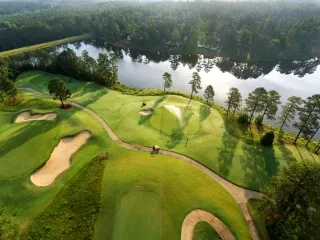

Venture into wildlife when you take a walk through Weymouth Woods Sandhills Nature Preserve. The longleaf pine forest in Southern Pines spans 900 acres and provides a window into the forests that once covered millions of acres. In 2007, the oldest longleaf pine tree in the preserve was found to be the oldest in the world.
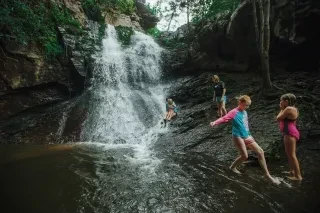
With a 60-foot trip down a natural rock waterslide to reach the 7-foot-deep pool at the bottom, Sliding Rock isn’t your average swimming hole. From Memorial Day to Labor Day, visitors can enjoy the thrill of being whisked down the slide by 11,000 gallons of mountain stream water under the watchful eye of Forest Service lifeguards.
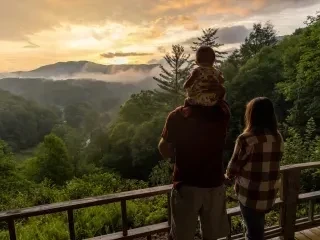
Carved deep into the Blue Ridge Mountains by the Linville River, the Linville Gorge is one of Eastern America’s most scenic and inviting gorges, commonly called the "Grand Canyon of the East." For 12 miles, the river descends more than 2,000 feet through the Gorge, including via Linville Falls, to level at Lake James. Part of the Pisgah National Forest, this is also home to Linville Falls, a spectacular three-tiered waterfall right off the Blue Ridge Parkway.
Just outside Bryson City, inside Great Smoky Mountains National Park, is a road named Lakeview Drive. If you follow it, it will lead you to a dead end at a tunnel – an unfinished project from the 1940s that was promised after Swain County gave up much of its private land to the federal government to create Fontana Lake and Great Smoky Mountains National Park.
You can experience many of the plants and animals of Canada while walking through the southern Appalachians at Mount Mitchell State Park. Standing at 6,684 feet, the summit is the highest point in the eastern United States and one of the must-do mountain adventures in North Carolina.
Gem mining is a popular activity for visitors to North Carolina, and when it comes to emeralds, the Hiddenite area in Alexander County is unmatched. The largest and longest emeralds ever found in North America were discovered in the Hiddenite area, which is home to Emerald Hollow Mine, the only emerald mine in the US open to the public for prospecting.
Charlotte Motor Speedway in Concord is a mecca for motorsports fans and thrill-seekers alike. Home to major NASCAR events like the Coca-Cola 600 and the Bank of America ROVAL™ 400, the track offers high-octane excitement in every season.